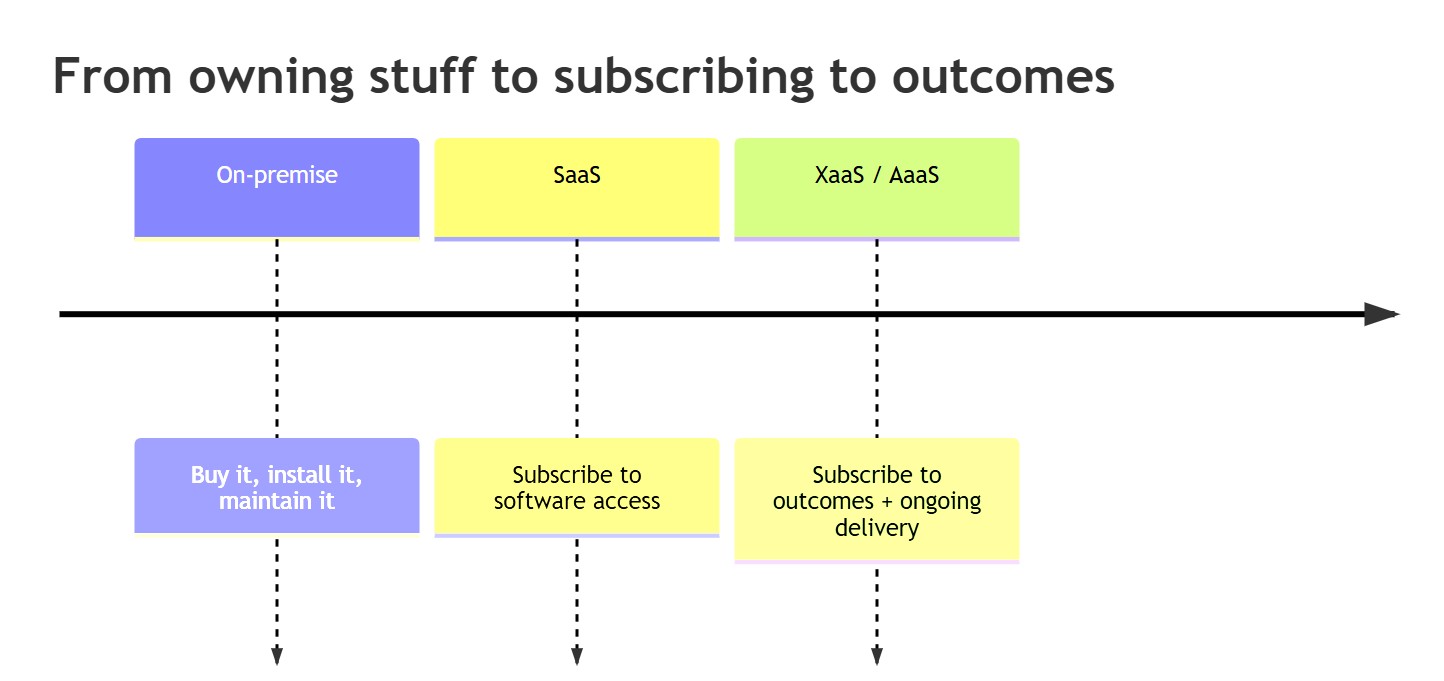
How SaaS trained all of us to expect “always-on”
A funny thing happened when the world moved from “install this software and pray” to “log in and get to work.” SaaS didn’t just change the delivery method, it changed our expectations. Salesforce’s plain-English definition is basically: software delivered over the internet as a subscription, where the provider hosts and manages it, and you just access it through a browser or app—no local installs, no patching weekends.
NIST (the U.S. government folks who show up whenever someone says “definition”) describes SaaS similarly: you use the provider’s applications running on cloud infrastructure, and you don’t manage the underlying network, servers, operating systems, storage, or even most application capabilities beyond limited configuration.
Gartner adds the part that software people love: in SaaS you’re consuming something delivered from a common code base in a one-to-many model, typically via subscription or pay-for-use.
And then, naturally, the “as-a-service” idea escaped the software cage. Deloitte has been calling out the move to flexible consumption models—aka XaaS—where customers purchase access to products “as a service,” which usually forces vendors to rethink how they deliver and operate, not just how they bill.
Here’s where I’m going with this: contractors don’t wake up craving “a cloud-based solution.” They wake up craving fewer surprises. SaaS changed the “how.” AaaS is about changing the “who” and the “when.”
Construction accounting isn’t general business accounting—and that’s the whole point
If construction accounting were just “income minus expenses,” we’d all be done by lunch. But you already know the truth: construction is job-based, progress-based, and timing is everything.
Procore describes WIP accounting as construction-specific accounting that tracks costs and revenues throughout a project’s lifecycle instead of waiting for completion. The WIP report—often called the WIP schedule—gives an overview of costs incurred and revenues earned for a period, basically a snapshot of work against budget.
CFMA leans into the same reality from the finance professional’s angle: their WIP-focused training emphasizes not just calculating and reconciling WIP, but analyzing cash flow tied to jobs, estimating cost to complete, and understanding why third parties care about the credibility of that WIP schedule.
Then there’s retainage—the industry’s favorite game: “It’s your money, but it’s not your money yet.” The AICPA notes that construction contracts often allow the customer to withhold a portion of what you bill until milestones are met or the project is complete (conditional retainage), and that many contracts retain 5% to 10% of each progress billing.
And yes, taxes have opinions too. The Internal Revenue Code has special rules for long-term contracts. IRC §460 generally requires taxable income from long-term contracts to be determined under the percentage-of-completion method, where completion percentage is computed by comparing costs incurred to estimated total contract costs.
All of that is why contractors don’t just need “accounting software.” They need accounting that matches how construction actually works.
Why AaaS isn’t “SaaS, but with invoices”
Let me say something mildly controversial: most contractors don’t have a software problem. They have a routine + reliability problem. And hiring internally isn't always the fix either.
SaaS is phenomenal at giving you access to tools without you managing infrastructure. IBM puts it straightforwardly: the SaaS provider hosts the application, and the provider is responsible for operating, managing, and maintaining the software and the infrastructure underneath it; the customer basically signs in, pays, and uses the thing.
AaaS borrows that same subscription expectation--similar to outsourced accounting for contractors--but applies it where it actually hurts: consistent execution of accounting, month after month, with someone accountable when it slips—not “the software vendor,” and not “your superintendent who’s also the HR department.”
The punchline is this: SaaS is “you can log in anytime.” AaaS is “your numbers are ready when you need them.” Those are not the same promise.
The cadence that makes contractor numbers actually usable
If you’ve ever tried to reconstruct a month of job costs from “misc” and “ask Steve,” then you already understand the moral of the story: accuracy is a habit, not a special event.
In construction, the WIP schedule is where reality meets the general ledger. Done well, it’s a fundamental financial document that ties costs and revenues to what’s actually happening on jobs. Done poorly, it’s a spreadsheet that makes everyone feel productive while quietly lying.
And when retainage is in play—as the AICPA points out, often 5% to 10% of progress billings—your cash flow story can look fantastic on paper while your bank account is doing the construction equivalent of the sad trombone.
This is why the “service” part of AaaS matters so much. It’s not glamorous, but it’s powerful: a repeatable monthly close, consistent job-cost coding, a real conversation about cost-to-complete before the month closes, and WIP that can survive contact with a banker, a bonding agent, or an auditor. And that difference between bookkeeping and financial leadership matters more than most contractors realize.
CFMA’s framing hits it: WIP isn’t just math; it’s credibility, cash flow perspective, and decision support.
And yes, I’m stealing a page from Deloitte’s “services operating model” thinking: a service has a defined customer, a clearly identifiable output, and an owner responsible for delivery and performance improvement over time. That’s a helpful mental model for what contractor accounting should feel like—especially when you’re sick of surprises.
Is “Accounting as a Service” a thing elsewhere—and why the acronym gets weird
So, am I the only one saying “Accounting as a Service”? No.
DevX defines Accounting as a Service using the exact acronym I like—AaaS—as a cloud-based solution that provides outsourced accounting and financial management support, combining technology (software/automation) with professional services from accountants/finance experts.
FIS, coming from the financial technology side, describes “aaS” broadly as services delivered via online subscription so companies can access capabilities without owning or managing the infrastructure. In that same discussion, they explicitly mention that you see “accounting as a service” because businesses want to keep financial necessities in one place and modularize what they need.
Then you get the acronym collisions.
First, there’s “Accounting Data as a Service,” which FIS uses as the name for a financial data API product that pulls normalized accounting/banking/e-commerce data—very cool, but different from “we run your monthly close.”
Second, there’s the Big Four meaning. KPMG uses “Accounting Advisory Services” with the acronym A-A-S for a technical accounting/financial reporting advisory practice. That’s legitimate and important work, but it’s not the same thing as contractor-facing AaaS where the deliverable is a steady cadence of close + job reporting + WIP discipline.
So yes: “Accounting as a Service” exists, AaaS is a common abbreviation, and the letters can absolutely get confused with other meanings. Honestly, that’s part of why “The Ass Model” works as a title. It’s memorable. It starts a conversation. And then you get to steer that conversation somewhere useful.
If you’re a contractor, the practical takeaway is simple: software gets you a dashboard. AaaS gets you an operating rhythm—and numbers you can run a business on.
For more information, listen to the podcast espisode where Jeff Sample of The Contech Crew first used the AaaS model to describe Levvigo.